CBSE Artificial Intelligence & Robotics Curriculum
Building future-ready skills through Artificial Intelligence, programming, robotics, creativity, and responsible technology use.
Introduction
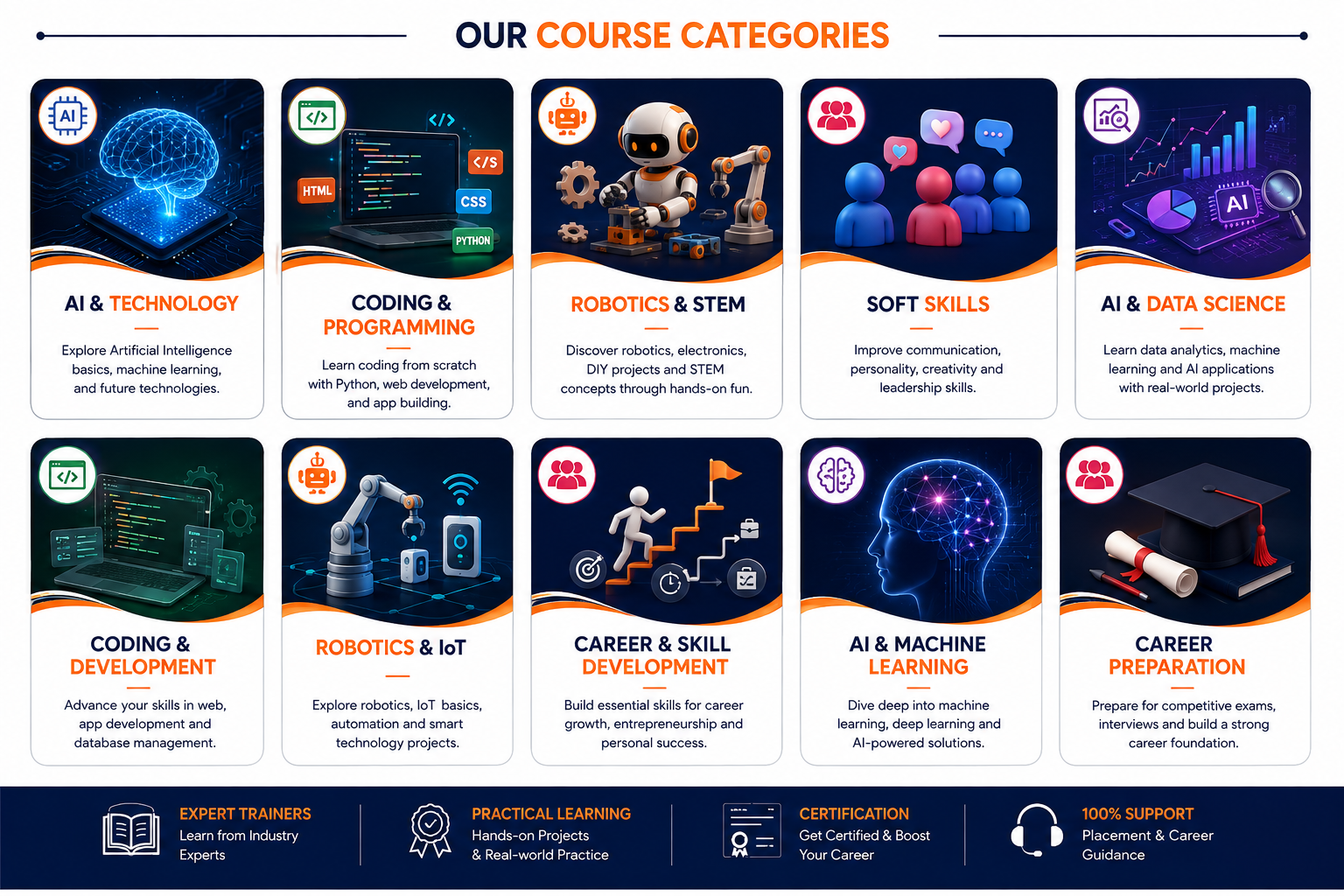
Artificial Intelligence (AI) and robotics are rapidly becoming important parts of education, technology, and everyday life. Recognizing this changing landscape, the CBSE Artificial Intelligence curriculum introduces students to AI concepts progressively, beginning with foundational computer skills and gradually moving toward programming, machine learning, natural language processing, computer vision, and robotics.
The curriculum is designed to help students understand not only how technology works, but also how it can be used creatively, responsibly, and ethically.
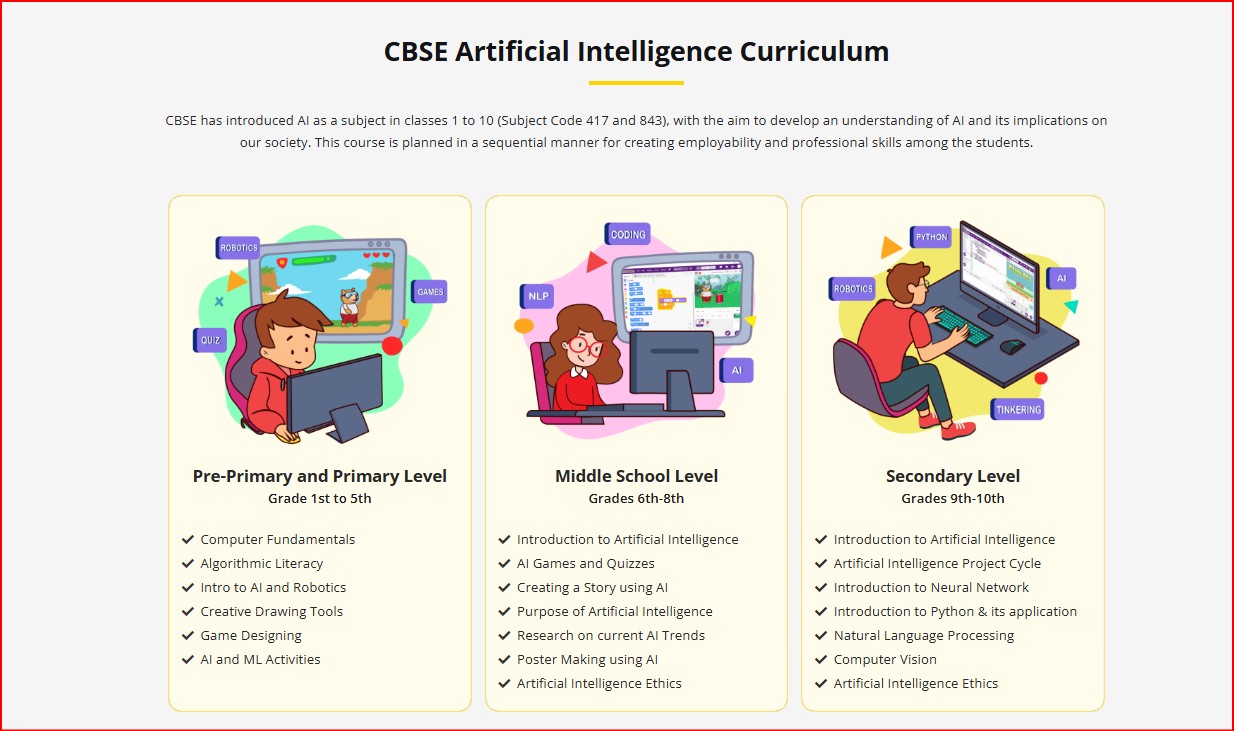
Pre-Primary & Primary
Grades 1–5- Computer Fundamentals
- Algorithmic Literacy
- Introduction to AI & Robotics
- Creative Drawing Tools
- Game Designing
- AI & ML Activities
Middle School
Grades 6–8- Introduction to AI
- AI Games & Quizzes
- Creating Stories Using AI
- Purpose of AI
- Current AI Trends
- AI Ethics
Secondary School
Grades 9–10- AI Project Cycle
- Neural Networks
- Python Programming
- Natural Language Processing
- Computer Vision
- AI Ethics
AI Learning Begins in the Early Years
At the Pre-Primary and Primary Level, students are introduced to the basic concepts of computers, algorithms, AI, and robotics. The focus is on developing curiosity, creativity, and digital literacy.
Students can explore technology through games, creative activities, and simple problem-solving exercises. These experiences help establish the foundation for computational thinking at an early age.
Developing AI Awareness in Middle School
At the Middle School Level, students begin exploring Artificial Intelligence more directly. They learn about applications of AI and discover how it is being used in different areas of society.
- Introduction to Artificial Intelligence
- AI Games and Quizzes
- Creating Stories Using AI
- Understanding the Purpose of AI
- Researching Current AI Trends
- Poster Making Using AI
- Artificial Intelligence Ethics
The inclusion of AI ethics helps students understand that technological development should be accompanied by responsible and thoughtful use.
Advanced Concepts in Secondary School
By Grades 9 and 10, students move toward more technical aspects of Artificial Intelligence. They are introduced to programming and several important areas of modern AI.
- Artificial Intelligence Project Cycle
- Introduction to Neural Networks
- Python and its Applications
- Natural Language Processing (NLP)
- Computer Vision
- Artificial Intelligence Ethics
Students also learn to approach AI problems systematically. The AI Project Cycle encourages them to identify problems, collect relevant information, develop solutions, and evaluate their results.
The Role of Robotics and Tinkering
Robotics adds a practical and interactive dimension to AI education. Through robotics and tinkering activities, students can connect software concepts with physical systems.
- Logical thinking
- Problem-solving
- Creativity
- Programming
- Teamwork
- Design thinking
Hands-on experimentation allows students to understand abstract technological concepts more easily while encouraging them to experiment, test ideas, and learn from mistakes.
Preparing Students for the Future
A progressive AI curriculum allows students to encounter technology at different levels of complexity as they advance through school. The learning journey can move from computer fundamentals and creative activities to AI applications, Python, neural networks, natural language processing, computer vision, and project-based learning.
This approach can help students develop technical as well as professional skills such as communication, creativity, collaboration, critical thinking, and problem-solving.
Conclusion
The CBSE Artificial Intelligence and Robotics curriculum provides a structured approach to introducing emerging technologies into school education. Starting with basic digital literacy and gradually progressing toward programming and advanced AI concepts, it provides students with opportunities to develop computational thinking, creativity, problem-solving skills, and ethical awareness.
As Artificial Intelligence continues to influence education, business, science, and everyday life, early exposure to these concepts can help students better understand both the opportunities and responsibilities associated with emerging technologies.
Ultimately, the curriculum encourages students to think creatively, solve problems systematically, and use technology responsibly.